
Junk removal for condos and apartments in Edmonton is generally allowed, but building rules can affect when and how unwanted items are removed. Unlike single-family homes, multi-unit properties often have shared entrances, restricted loading areas, and specific procedures for moving large items. Residents may need approval before scheduling a pickup, particularly when removal involves elevators or common areas. 2 Kings Junk Removal provides residential junk removal services for condo owners, tenants, and property managers throughout Edmonton.
Why Multi-Unit Buildings Have Different Rules
Condominiums and apartment buildings have rules governing shared spaces, building access, and activities that could disrupt other residents. These requirements help protect common property, maintain security, and coordinate activities involving outside service providers.
In condominiums, the condominium corporation establishes bylaws and rules governing common property. Property management typically handles day-to-day arrangements, including moving schedules and access to shared facilities. In rental apartment buildings, management establishes building procedures, while individual lease agreements may contain additional requirements for tenants.
Not every building requires advance permission for junk removal. Some allow residents to remove personal belongings during regular hours without notifying management. Others require advance notice, designated moving times, or approval before allowing removal crews onto the property. These restrictions generally concern how items leave the building rather than whether residents are permitted to dispose of their own belongings.
What Typically Requires Approval Before Removal
Residents can generally arrange removal of their personal belongings, but activities involving shared facilities or property belonging to another party may require authorization. The level of approval depends on the building’s procedures, the items being removed, and whether shared property will be used.
Depending on the building, approval may be necessary for:
- Elevator reservations: Using a service elevator or reserving a designated moving period.
- Loading areas: Temporarily occupying restricted parking spaces, loading docks, or designated loading zones.
- Moving schedules: Transporting large furniture or appliances during specified hours.
- Removal crew access: Registering outside service providers or supplying proof of insurance where required.
- Shared property: Removing furniture, equipment, or other belongings owned or controlled by the condominium corporation or building owner.
Responsibility for obtaining permission depends on who is arranging the removal and who controls the affected property. Tenants, condo owners, and property managers have different responsibilities when authorizing work.
Tenants are typically responsible for following their lease and applicable building procedures when removing personal belongings. If an appliance or piece of furniture was supplied by the landlord, the tenant should obtain authorization before disposing of it.
Condo owners can generally authorize removal of their own belongings but must comply with applicable condominium bylaws and procedures when using common property. Ownership of a unit does not automatically provide unrestricted access to shared building facilities.
Property managers coordinate access to shared facilities and may arrange removal of property they are authorized to manage. However, permission to use a loading area or elevator does not establish ownership of the items being removed.
For landlord-arranged cleanouts, abandoned belongings, or shared household items, the person booking the removal must have authority to dispose of the property. Building access approval alone is not sufficient, particularly when the belongings may be owned by another resident or former tenant.
Who pays for junk removal is a separate consideration. The person or organization hiring the removal company is generally responsible for the agreed service charges unless another payment arrangement has been established. A tenant, landlord, or property manager may ultimately bear the cost depending on their agreement and the circumstances. Building management does not automatically become responsible for payment simply because it approves access.
Access Constraints That Affect Junk Removal
Access conditions influence whether junk can be removed during the requested appointment and how much handling is required. Removal crews need a practical route between the unit and the collection vehicle, including suitable entry points and sufficient clearance for bulky items.
Locked entrances, insufficient clearance, restricted loading access, or unavailable moving facilities can prevent same-day removal even when a crew is available. Some restrictions require advance coordination, while physical limitations may require additional labour or an alternative removal arrangement.
Ground-floor units with direct exterior entrances may allow furniture and other items to be removed without passing through interior common areas. However, exterior walkways, shared parking areas, and loading spaces may still be subject to building restrictions. The entire removal route must be accessible, authorized, and suitable for the size of the items being collected.
Elevators and Shared Hallways
Elevator availability is a significant consideration when removing furniture and appliances from upper-floor units. Some buildings require residents to reserve a service elevator before transporting bulky items, while others permit use of regular passenger elevators during designated periods.
Management may require protective padding or limit furniture movement during busy periods. Where elevator access is unavailable, crews may need to use stairs, which can increase handling requirements and affect whether oversized items can be removed safely.
Large couches, mattresses, and appliances can be difficult to move through narrow stairwells, tight corners, and restricted doorways. Furniture that cannot pass through an available route may require disassembly or an alternative removal arrangement, depending on the item’s construction.
Shared hallways must remain accessible throughout the work. Items should not be left in corridors, block neighbouring units, or obstruct fire exits and designated exit routes.
Underground Parking and Loading Areas
Underground parking garages can create access problems because junk removal trucks may exceed the available vehicle-height clearance. Even when a truck fits through the entrance, building rules may prohibit commercial loading in resident parking areas.
Some properties require all large-item pickups to use designated loading docks or exterior loading zones. These locations may have separate access requirements or restrictions that affect when removal crews can use them.
If underground loading is unavailable, crews may need to transport items through a ground-floor entrance to an approved vehicle location. Longer carrying distances and additional handling can affect labour requirements and the overall removal cost.
Loading arrangements should account for vehicle size, access restrictions, and the distance between the building exit and the truck. A nearby parking space is not automatically an authorized loading area, so the designated collection point should be confirmed before the appointment.
Common Mistakes That Cause Delays or Fines
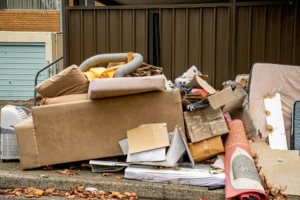
One common mistake is assuming that unwanted furniture can be left beside a communal garbage bin for collection. Under the City of Edmonton’s apartment and condo waste collection guidance, bulky items left beside communal bins are not collected through regular waste service.
Residents must arrange separate removal, such as a private junk removal pickup, or transport eligible items to an appropriate disposal facility. Abandoned items can obstruct collection areas and may result in additional disposal costs for property management.
Another mistake is failing to account for the consequences of building access violations. If required arrangements are missing, management may refuse access to shared facilities, forcing the removal appointment to be delayed or rescheduled. Additional handling or return visits may also affect service costs.
Property damage creates a separate financial risk. Scratched walls, damaged elevator interiors, or damaged flooring can result in repair claims against the responsible party. Temporary storage of unwanted items in unauthorized common areas can also lead to complaints or removal requirements.
Not every building-rule violation results in an enforceable fine. In Alberta condominiums, monetary sanctions must have the required legal and bylaw authority. A breach of a condominium rule alone does not automatically authorize a monetary sanction, and rental apartment charges depend on the applicable agreement and legal requirements.
Residents should distinguish between management complaints, authorized condominium bylaw penalties, property damage charges, and additional junk removal costs. Each arises under different circumstances and should not be treated as an automatic consequence of arranging a pickup.
How to Prepare for a Smooth Condo or Apartment Removal
Preparing for condo or apartment junk removal involves confirming building requirements and providing accurate access information before scheduling. Identifying potential restrictions early helps residents choose an appropriate appointment time and avoid additional handling or rescheduling costs.
The following steps help prevent avoidable delays:
- Check building procedures. Ask property management whether junk removal requires advance notice, written authorization, or a designated moving window.
- Confirm ownership and disposal authority. Ensure the items belong to you or that the responsible owner has approved their removal.
- Identify everything being removed. Include large furniture, appliances, and oversized items that could affect equipment or access requirements.
- Verify the removal route. Confirm elevator reservations, stairwell access, doorway clearance, and any required protective measures.
- Arrange a suitable loading location. Establish where the removal vehicle is permitted to park and whether building entrances can accommodate the work.
- Coordinate the appointment. Ensure the necessary access arrangements remain available throughout the scheduled removal and that someone can provide entry if required.
For move-outs, residents should schedule removal before their required vacancy deadline, allowing for any building restrictions that could affect appointment availability. This is especially important when elevator reservations or loading facilities are limited to designated periods.
Before confirming a booking, provide the removal company with details about the items, their location within the building, and any access limitations. This allows the required labour, equipment, and appointment arrangements to be assessed before the crew arrives.
Through our residential junk removal services in Edmonton, we remove approved household items from condos and apartments, including furniture, mattresses, appliances, and unwanted clutter. Scheduling and pricing account for item volume, access conditions, and any additional handling requirements. Residents, condo owners, and property managers can contact 2 Kings Junk Removal to discuss their building’s requirements and arrange a pickup suited to the property’s access conditions.

